



info@sgrolls.com
+86-391-6610868
As a core link in the iron and steel industry, steel rolling production involves equipment operating under multiple harsh conditions such as high temperature, high pressure, severe friction and corrosive media. Key components like rolls, looper rolls and guide guards are prone to failure problems including wear, cracks and spalling. Traditional repair methods such as surfacing welding and thermal spraying generally have drawbacks like low bonding strength, large heat-affected zone and serious material waste, which not only restrict production continuity, but also increase operation and maintenance costs as well as product rejection rates. Relying on outstanding advantages such as high precision, low heat input and customizable performance, laser cladding technology has achieved a revolutionary breakthrough in the repair and strengthening of steel rolling equipment, becoming a new approach for iron and steel enterprises to implement cost reduction, efficiency improvement and green development.
Technical Core: Precise Empowerment to Break Through Traditional Bottlenecks
The core principle of laser cladding technology is to synchronously melt alloy powder and the substrate surface through a high-energy laser beam, and form a new coating through rapid solidification. This technology can not only restore the dimensions of defective components, but also achieve wear-resistant hardening by changing the content of surface materials. Compared with traditional processes, its technical advantages are very obvious.
Low heat input preventing workpiece deformation is its core competitiveness. The width of the heat-affected zone of traditional surfacing welding can reach 5-10mm, which is easy to cause deformation of precision components such as rolls and requires additional time for correction. In contrast, the heat-affected zone of laser cladding is only 0.1-1mm, and the substrate deformation is less than 0.1mm. Combined with six-axis linkage robots and laser displacement sensors, it can achieve high-precision repair without subsequent complex correction procedures, perfectly adapting to components with high dimensional accuracy requirements such as hot rolling backup rolls and cold rolling looper rolls.
Customizable coating performance enables the technology to meet diverse demands. For components subject to high-temperature abrasive wear such as inlet rolls of hot rolling mills, and components working in humid and corrosive environments such as rolls of cold rolling mills, guide wheels and other parts can have significantly improved hardness after being clad with special wear-resistant and high-temperature-resistant alloys, with wear resistance 3-5 times higher than that of traditional materials. This customized-on-demand feature realizes precise repair with the principle of "one solution for one working condition".
The efficient and environmentally friendly process characteristics conform to the development trend of green steel industry. The material utilization rate of laser cladding is far higher than that of traditional surfacing welding. Taking the repair of a φ1000mm five-roll as an example, it can reduce powder waste by about 20kg per repair and save material costs by 4000 yuan. Meanwhile, dust is controlled through the combination of dust cover and industrial vacuum cleaner, resulting in reduced pollutant emissions and no obvious noise, which fully meets the "ultra-low emission" requirements of the steel industry, and the safety accident rate is significantly lower than that of traditional surfacing welding.
Full-Scenario Coverage: Efficiency Upgrade from Core Components to Entire Production Lines
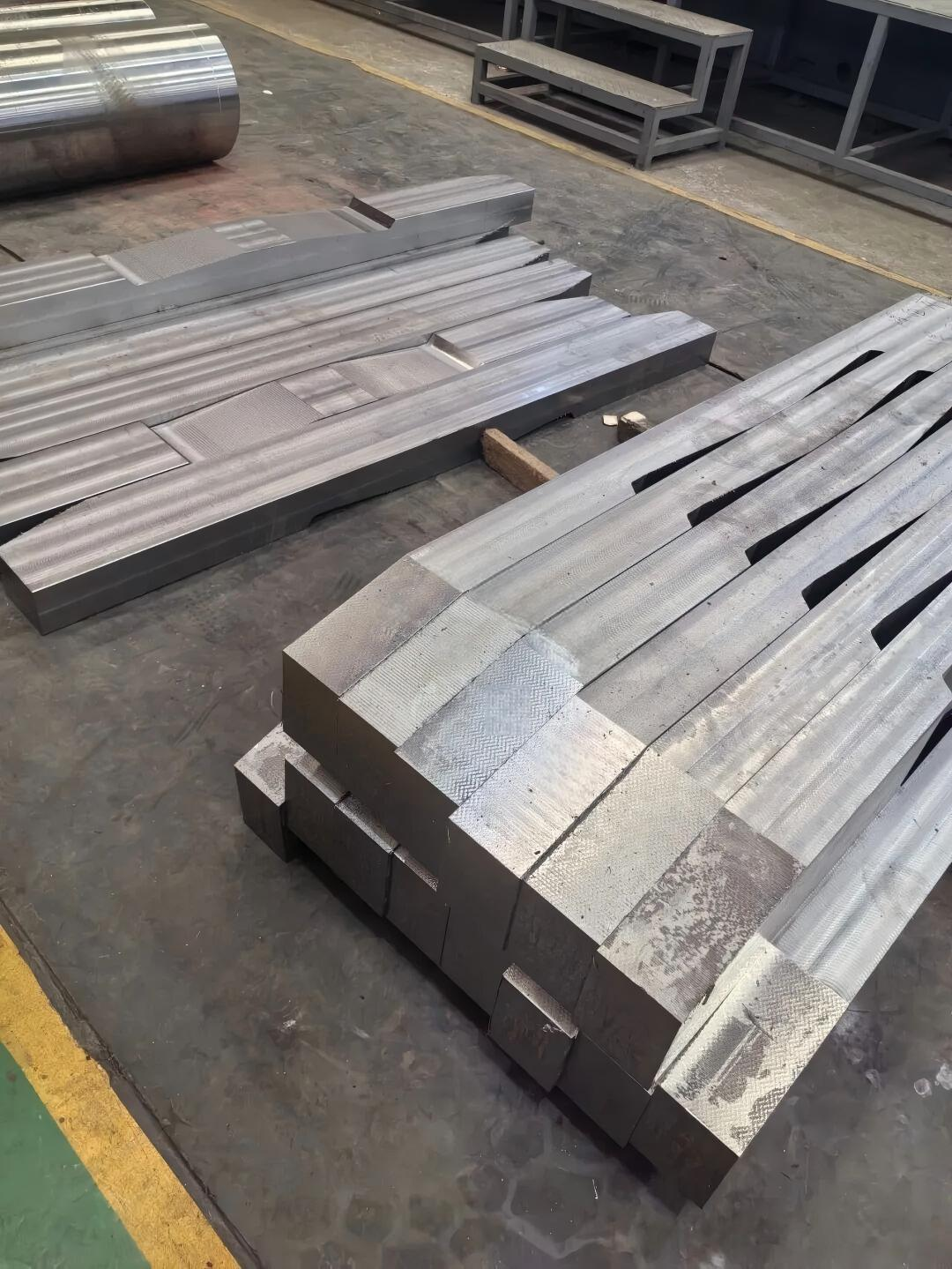
Laser cladding technology has achieved full-category adaptation to vulnerable components of steel rolling production lines. Whether it is core roll components, transmission parts or auxiliary guide components, all can realize efficiency improvement through repair or new product strengthening, becoming a key entry point for steel mills to reduce costs and improve quality.
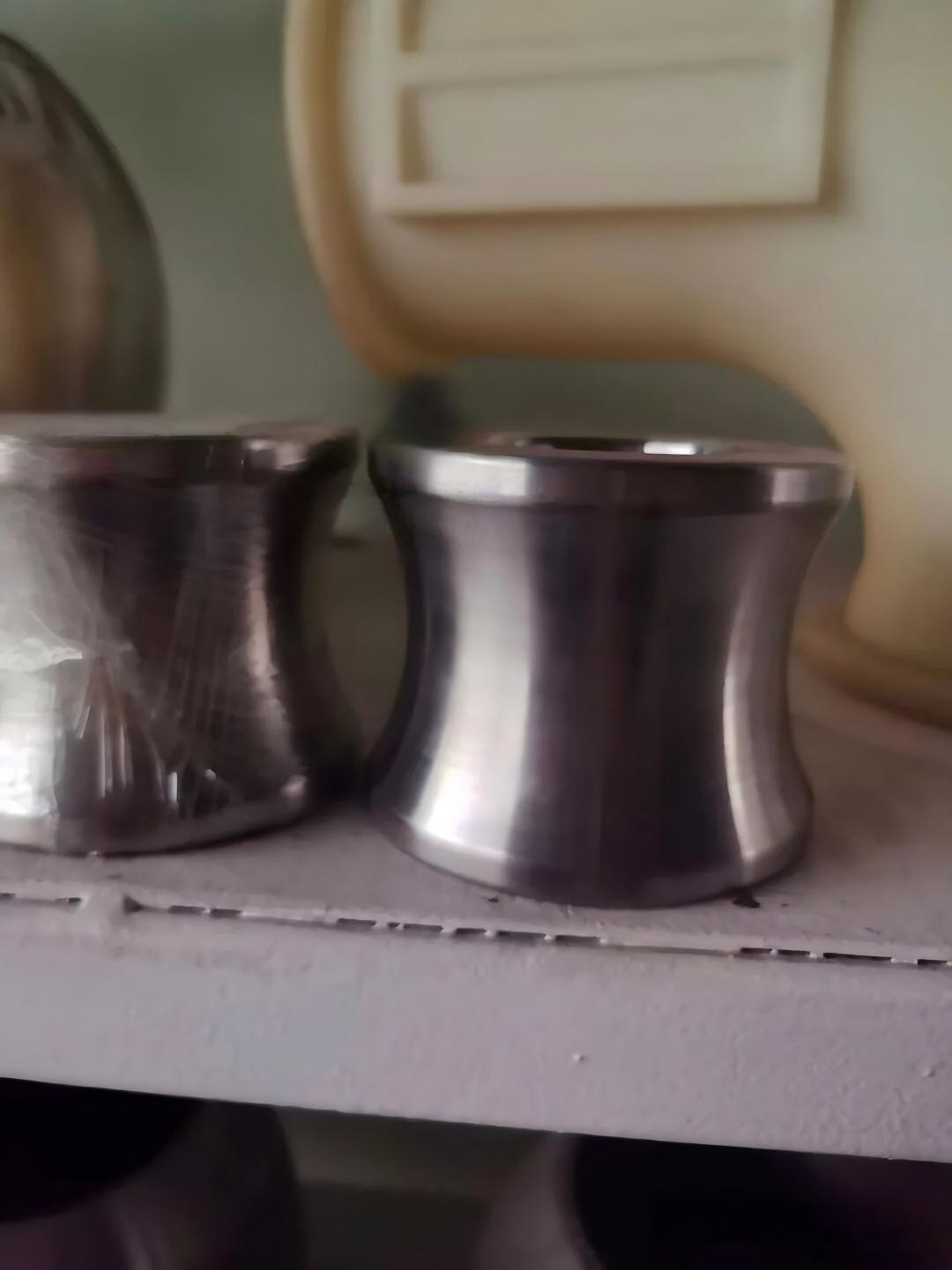
In the field of roll components, laser cladding has achieved a breakthrough of "repairing old to be better than new". As core components of steel rolling, new rolls have high procurement costs, and traditional surfacing welding repair also has high expenses. Laser cladding repair can reduce maintenance costs and factory expenditures, with costs significantly lower than both new roll procurement and traditional surfacing welding repair. The service cycle of repaired rolls is prolonged, the annual maintenance frequency is reduced, and downtime losses are greatly decreased. For cold rolling looper rolls, ultra-high-speed laser cladding technology can achieve mirror-level coating surface finish, eliminating strip steel scratches. At the same time, the extremely small heat-affected zone avoids roll body deformation that affects stability.
In the field of guide and auxiliary components, laser cladding solves the problem of "small components slowing down the entire production line". As key components for steel material guiding, traditional guide guards are prone to wear and deformation, leading to steel jamming and downtime. After laser cladding strengthening, full working surface wear-resistant protection can be achieved, the service life is greatly prolonged, the guiding accuracy remains stable for a long time, which effectively reduces product defects such as lateral bending and torsion, and lowers the rejection rate. As high-frequency consumables in hot rolling bar production lines, guide wheels have improved hardness and significantly enhanced heat resistance and anti-sticking performance after cladding treatment, greatly reducing replacement frequency and maintenance costs. In addition, this technology can also be applied to the repair and strengthening of components such as motor rotors, transmission shafts and blast furnace tuyere nozzles, realizing long-term stable operation of the entire production line equipment.
Value Implementation: Dual Empowerment of Cost Reduction, Efficiency Improvement and Green Development
The value of laser cladding technology to the steel rolling industry is not only reflected in the cost reduction and service life extension of individual components, but also achieves multi-dimensional improvement of production efficiency, product quality and environmental benefits through the whole-life cycle management, which meets the high-quality development needs of the steel industry.
At the production efficiency level, laser cladding greatly shortens the downtime cycle. Traditional surfacing welding repair requires complex processes such as "disassembly - surfacing welding - annealing - rough machining - finish machining", with a long total cycle. In contrast, laser cladding optimizes the process with a shorter cycle and reduced downtime. Meanwhile, the technology can realize local repair without overall machining, reducing processes and further shortening processing time. Combined with on-site service mode, it minimizes the impact of production line interruption.
At the cost control level, the whole-life cycle cost advantage is remarkable. In addition to the reduction of direct repair and procurement costs, the improvement of material utilization rate, reduction of maintenance frequency and decrease of downtime losses form a superimposed effect.
At the green development level, the technology practices the concept of circular economy. By repairing and reusing waste components, extending service life, it reduces resource consumption caused by discarding waste rolls and producing new rolls, helping steel mills achieve the goals of "carbon peaking and carbon neutrality". Meanwhile, the process characteristics of no electroplating pollution and low dust emission promote the transformation of steel rolling production towards cleanliness, which is in line with the national policy orientation of green manufacturing.
Future Outlook: Technological Iteration Driving Industry Upgrading
With the continuous iteration of technologies such as ultra-high-speed laser cladding, intelligent parameter control and multi-element alloy powder research and development, the application of laser cladding in the steel rolling field will extend towards higher precision, higher efficiency and wider scope. On the one hand, for precision rolling needs such as high-end automotive steel plates, laser cladding will realize more precise control of coating performance, further improving product surface quality and dimensional accuracy. On the other hand, the integration of intelligence and automation will become a trend. Through 3D scanning modeling, online detection and closed-loop control, full-process digital management of the repair process will be realized, greatly improving operation stability and consistency.
Against the background of intensified competition in the steel industry, rising cost pressure and stricter environmental protection requirements, laser cladding technology has upgraded from an "optional repair method" to an "indispensable efficiency improvement tool". It provides steel mills with a precise, efficient and environmentally friendly equipment operation and maintenance solution.
Contact: John Zhai
Tel: +86-391-6610868
Email: info@sgrolls.com
Add: Tiantan Innovation Park, Huling Industrial Zone, Jiyuan City, Henan Province, China 459000
We chat


